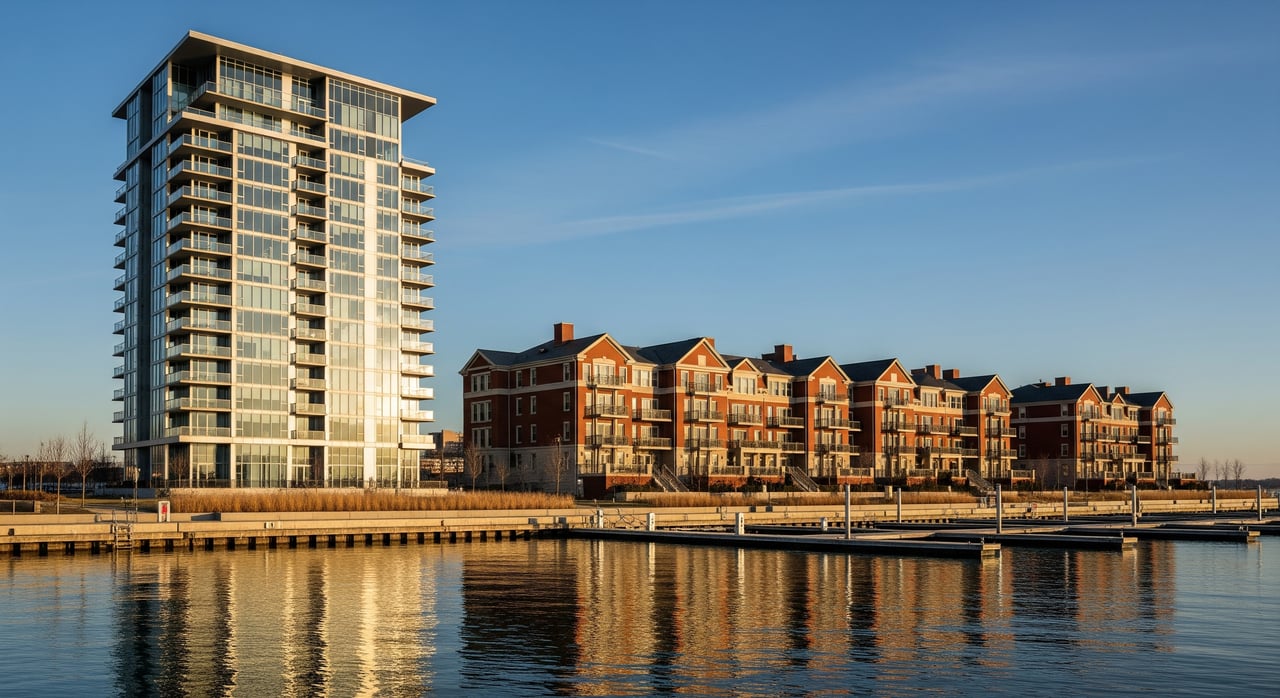
Picture your morning coffee with Lake Erie views and an easy stroll to the water. If you are debating between a condo or a townhouse on the Buffalo waterfront, you are not alone. Each option delivers a different mix of lifestyle, cost, and long-term value. This guide breaks down what matters in Buffalo’s waterfront neighborhoods so you can choose with confidence. Let’s dive in.
Condo vs. townhouse at a glance
Condos give you ownership of the interior of your unit and shared ownership of common areas through an association. You will often find them in mid or high-rise buildings near Canalside and the Cobblestone District, with amenities like a gym or garage. They fit buyers who want low exterior maintenance and strong walkability.
Townhouses are usually fee-simple. You own the structure and the land under it. On the waterfront, you will see row-style homes and infill townhomes, especially in the Old First Ward and nearby areas. They appeal to buyers who want more space, direct exterior access, and control over the property.
Key tradeoffs are clear. Condos offer convenience and amenities, balanced by association rules. Townhouses provide autonomy and privacy, with more owner responsibility for exterior care.
Lifestyle tradeoffs on the water
Maintenance and rules
With a condo, exterior upkeep is handled by the association. Your fees usually fund building insurance, landscaping, snow removal, and reserves. Expect house rules that cover everything from renovations to pets and parking.
With a townhouse, you handle your own exterior and land unless a small HOA covers shared items. You set your pace for repairs and upgrades. Rules may be lighter or absent, but you carry more of the work and cost.
Privacy and space
Many townhouses offer a garage, driveway, and small outdoor spaces. Fewer neighbors share your walls compared to a mid-rise building. Condos trade private outdoor space for shared amenities and building services.
Walkability and access
Condos near Canalside, the Cobblestone District, and downtown place you close to restaurants, parks, and transit. Townhouses in the Old First Ward and nearby river blocks keep you close to the water and recreation like Buffalo RiverWorks, with a more residential feel.
Total cost of ownership
Purchase price and waterfront premium
Waterfront locations in Buffalo command a premium. The size of that premium depends on the building or block, age, views, and amenities. Newer or boutique condos near downtown can list at higher prices per square foot than older townhouses, but you should compare specific comps in the same micro-market.
Monthly fees and utilities
Condo fees vary. They can range from the low hundreds to several hundreds per month depending on services, utilities included, and amenities. Fees typically cover building insurance, exterior maintenance, landscaping, snow removal, common utilities, reserves, and management.
Townhouses may have modest or no HOA fees. If there is no HOA, you pay utilities and maintenance directly. You control how and when to spend, but you assume the full cost of upkeep.
Taxes and special assessments
Property taxes follow Erie County and city rules for your parcel. Waterfront areas can fall into different tax and school assessment boundaries, so verify with Erie County Real Property Tax Services. Ask about recent or planned special assessments, especially in condos where large building projects or repairs can add unexpected costs.
Insurance and flood risk
Flood risk can be a major cost driver on the lakefront and along the river. If a property sits in a FEMA Special Flood Hazard Area, your lender will likely require flood insurance. Premiums depend on the flood zone, elevation, and floodproofing.
With condos, learn what the master policy covers versus your unit policy. You may need coverage for interior finishes and loss assessment. With townhouses, plan for separate homeowners and flood policies. Always review elevation certificates and any recent flood claims.
Financing differences
Condo financing can be more complex. Lenders review the building’s financials, reserves, litigation, and owner-occupancy ratios. If you plan to use FHA or VA loans, confirm that the project appears on the respective approval lists. New or small projects sometimes face approval challenges.
Townhouses are usually financed like single-family homes. Conventional, FHA, and VA options tend to be more straightforward. Flood insurance requirements and perceived climate risk can still affect underwriting for any waterfront purchase.
Neighborhood snapshots
Canalside and Cobblestone District
Expect more condo offerings close to entertainment, restaurants, and transit. Buildings may feature garages, security, and amenities that reduce day-to-day maintenance. Walkability and views often drive demand.
Old First Ward and adjacent blocks
You will see a mix of renovated rowtowns, historic attached homes, and new infill. Townhouses here can deliver more private entrances, garages, and small outdoor areas. The vibe is residential with quick access to the river and neighborhood spots.
South Buffalo waterfront and riverfront
Redevelopment is active and product types can vary. You may find both condo conversions and townhouse-style options. Always confirm flood zones, shoreline protections, and planned projects that could shape the area over time.
Resale and liquidity
Condos can be sensitive to the health of the HOA. Strong reserves, a clean maintenance record, and clear rules help protect value. Oversupply from new downtown projects can affect pricing, so keep an eye on inventory.
Townhouses with land ownership often attract buyers who want a house feel without moving far from the water. Resale depends on location, parking, views, and maintenance condition. In both cases, buyer demand shifts with interest rates, flood insurance costs, and lifestyle trends.
Due diligence: what to check
For condo buyers
- Condominium declaration, bylaws, and house rules
- Budget, latest balance sheet, and reserve study
- Minutes from the last 12 months of board meetings
- List of pending or past litigation and any special assessments
- Insurance certificate and master policy details, including coverage limits
- Owner-occupancy ratios and rental, pet, parking, and storage policies
- Utilities included in fees and restrictions on alterations
- Lender review of project approval if using FHA or VA financing
For townhouse buyers
- Fee-simple title, property boundaries, easements, and rights-of-way
- Any HOA covenants, budget, and maintenance responsibilities
- Exterior condition, roof, drainage, foundation, and any seawall or dock
- Flood zone, elevation certificate, and flood insurance needs
- Parking, snow removal responsibilities, and nearby development activity
For sellers preparing to list
- Condos: Gather association documents, insurance declarations, reserve studies, and any assessment history
- Townhouses: Provide tax records, surveys if available, exterior maintenance receipts, and any HOA docs
- Price to your micro-market: consider water views, parking, flood risk, and nearby amenities
Waterfront-specific factors
Flood zones and resilience
Use FEMA flood maps to confirm the property’s zone. Ground-level units or basements can face higher risk. Review elevation certificates and ask about mitigation features.
Zoning and design review
Some waterfront blocks fall under historic or design overlays. This matters if you own a townhouse and plan exterior changes. Confirm requirements with the City of Buffalo planning and permitting departments.
HOA realities on the water
Waterfront buildings endure harsh weather, salt exposure, and humidity. Long-term maintenance can be higher, which affects reserves and fees. Review the building’s maintenance plan and the history of special assessments.
Public access and community plans
Waterfront redevelopment often includes public access to parks and paths. This can shape privacy and use rules, especially for townhouse yards or docks. Keep an eye on city and state waterfront plans that may influence future projects and character.
How to choose: a quick guide
Choose a condo if you want:
- Lower exterior maintenance and bundled services
- Amenities like a gym or secure parking
- Downtown walkability near Canalside and Cobblestone
- A lock-and-leave lifestyle with clear rules
Choose a townhouse if you want:
- More control over your property and exterior
- A garage, driveway, or small yard
- A quieter, residential feel near the river
- House-like living without leaving the waterfront
Smart next steps
- Confirm your financing path early. If you need FHA or VA for a condo, verify project approval. Ask lenders about HOA reviews and flood insurance requirements.
- Pull local comps for your specific block and property type. Inventory and price per square foot can shift quickly along the waterfront.
- Order thorough inspections. Include roof and drainage checks for townhouses and building system reviews for condos. Consider a home inspector with waterfront experience.
- Verify flood details. Check the FEMA map, elevation certificates, and insurance quotes. Ask about any past flood claims.
- Review all HOA and planning documents. You want to know the rules, reserves, and any upcoming projects before you buy or list.
When you want seasoned, waterfront-specific guidance, work with a local expert who knows the blocks, the buildings, and the paperwork. For high-touch buyer representation, premium listing strategy, and concierge support, connect with Susan Lenahan.
FAQs
What is the main ownership difference between a condo and a townhouse on the Buffalo waterfront?
- A condo gives you ownership of the unit interior plus shared common elements through an association, while a townhouse is usually fee-simple ownership of the home and land.
How do HOA fees for condos compare to townhouse costs near Lake Erie?
- Condo fees cover building services and reserves and can range from the low hundreds to several hundreds per month, while townhouses often have lower or no fees but higher direct maintenance costs.
Do I need flood insurance for Buffalo waterfront properties?
- If the property is in a FEMA Special Flood Hazard Area, lenders typically require flood insurance, and premiums depend on zone, elevation, and mitigation features.
Are condos harder to finance than townhouses in Buffalo?
- Often yes, because lenders review condo financials, reserves, litigation, and owner-occupancy ratios, and some loans require project approval, while townhouses are usually financed like single-family homes.
What should I review in a condo building before buying near Canalside?
- Review bylaws, rules, budgets, reserve studies, board minutes, insurance coverage, assessment history, and policies on rentals, pets, parking, and alterations.
How can future waterfront projects affect my townhouse resale value?
- New development, public access plans, and zoning or design overlays can impact views, privacy, parking, and demand, so watch city and state planning documents for updates.