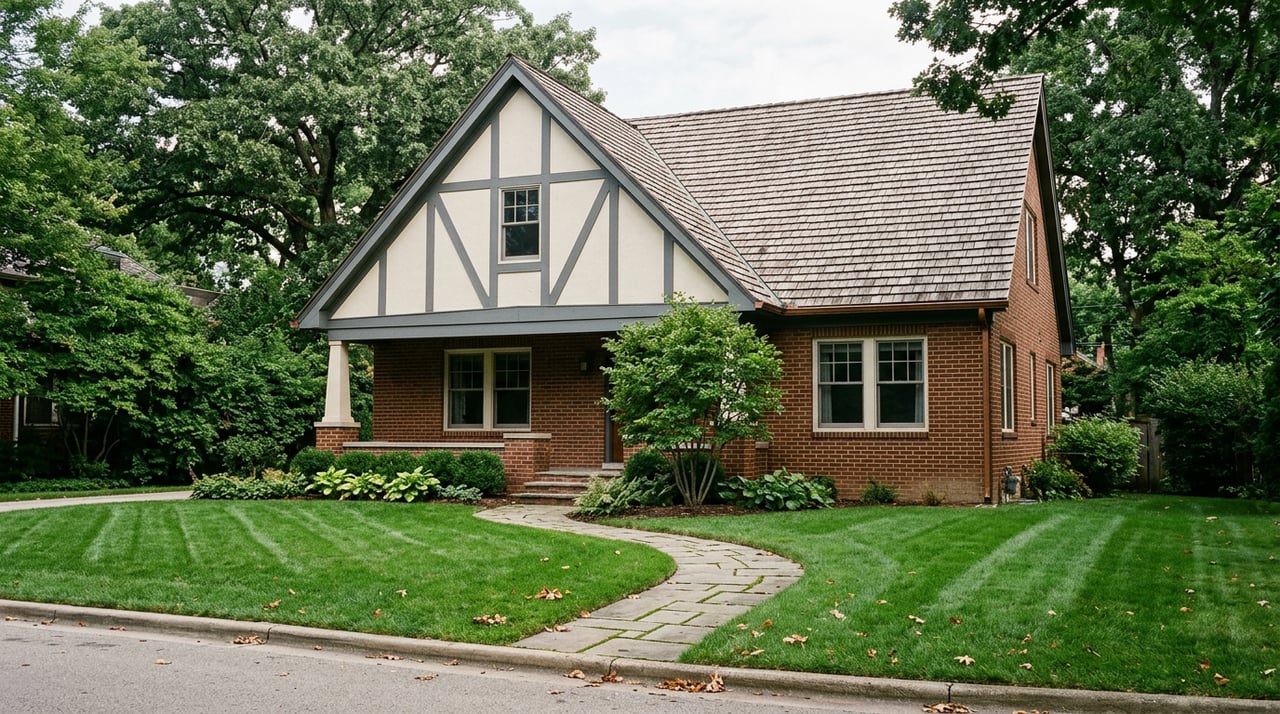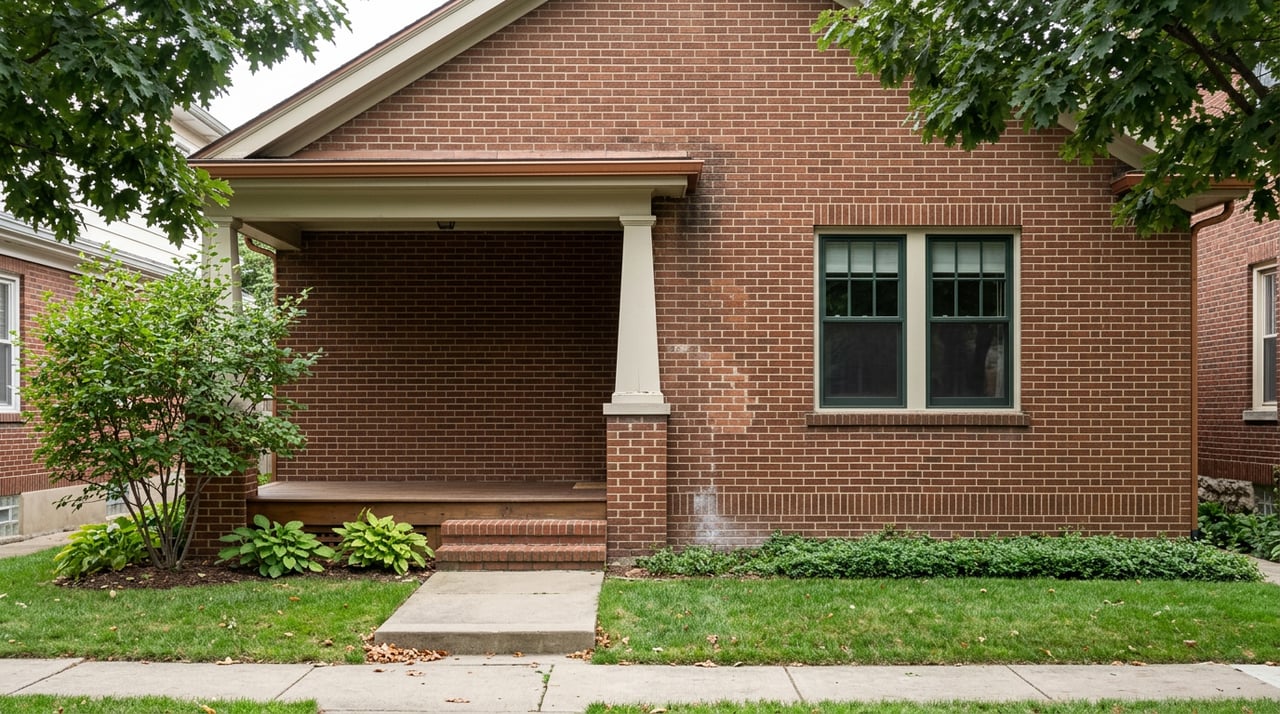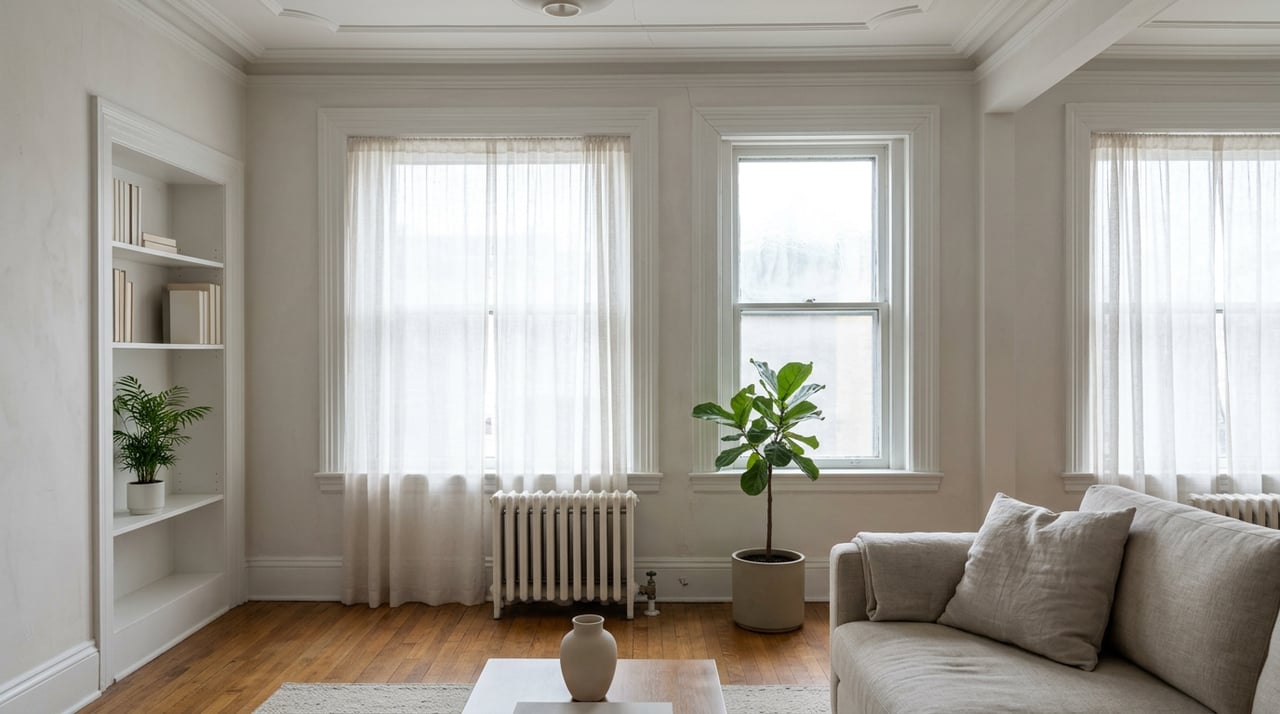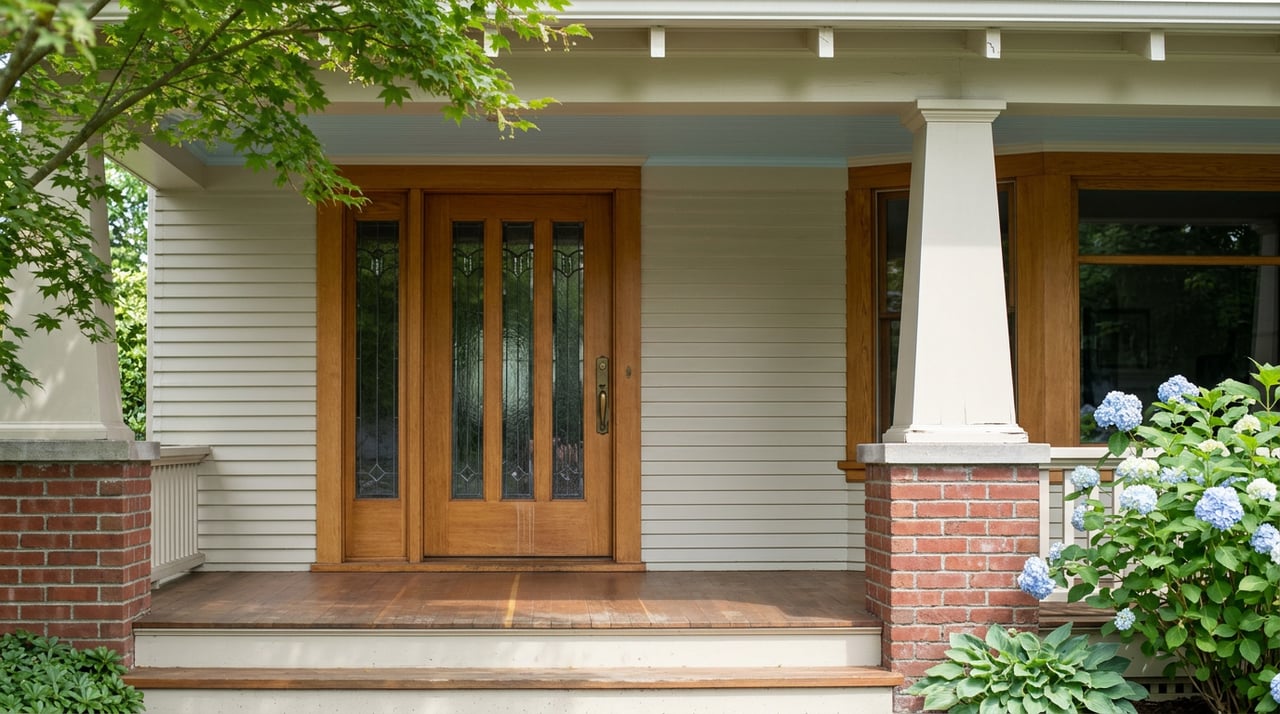
Two houses sit less than a mile apart. Both back up to Delaware Park. Both were built with the kind of oak millwork and leaded glass that no builder is putting back into a house in 2026. One is asking $310,000. The other is asking $845,000. Neither is mispriced.
That gap is the story of Parkside. It is not a single market with a single median, and the moment a relocating buyer treats it as one, they either overpay for the wrong block or walk away from a bargain thinking something must be wrong with it. Here is the mechanism behind the split, what the 2026 numbers actually say, and the one piece of historic-district lore that costs Parkside sellers real money because they believe something about their house that is not true.
One neighborhood, two development eras
Parkside was built in two waves separated by more than half a century, and the seam still runs through the pricing.
The eastern half is the older half. Parkside was an internal part of Olmsted's park and parkway plan for Buffalo, with Delaware Park as the green centerpiece and roads spreading from it like ripples to extend the pastoral aesthetic and ease the transition from the city. The impetus for Parkside East was the rapid growth of Buffalo's population, which doubled from 1890 to 1930. That produced a fifty-year span of residential styles including late Victorian, Queen Anne, Shingle, Bungalow, Prairie, Romanesque Revival, Colonial Revival, Tudor Revival, and the beginning of standardization visible in the large number of American Foursquares. Four of the homes are Frank Lloyd Wright designs, anchored by the Martin House at 125 Jewett Parkway.
The western half is a different animal. Development of Parkside West began in the 1920s on what had been the grounds of the Pan-American Exposition of 1901, its streets curving to follow the boundaries of Delaware Park, with restrictive covenants governing setbacks, architectural character, and construction costs that produced a visual quality close to what Olmsted had hoped to achieve. Those covenants, written by developers to protect the resale value of the first buyers, are the reason Nottingham Terrace and Middlesex Road still look the way they do a hundred years later. They dictated minimum spend on construction. They dictated how far a house sat from the curb. They effectively created a luxury tier before the first shovel went in.
| Parkside East | Parkside West | |
|---|---|---|
| Development era | 1890s–1930s | Began 1923 |
| Original plan | Olmsted street grid | Post-Exposition, covenant-controlled |
| Dominant stock | Queen Anne, Foursquare, Bungalow, four Wrights | 1920s Colonial Revival, Tudor Revival, French Chateau |
| Signature streets | Jewett Parkway, Woodward, Russell | Nottingham Terrace, Meadow, Middlesex |
| Typical 2026 price band | ~$200K–$400K | ~$400K–$650K, with $1M+ outliers |
The price bands come from the Homes.com neighborhood guide, and they are not marketing gloss. They map cleanly onto the deed history.
What the 2026 medians are actually telling you
The single-median problem shows up the second you look at data from different aggregators inside the same six-week window.
As of June 2026, one portal reported Parkside's median sale price at $595,000 with an average sale price of $726,490 and 30 days on market. A separate portal, pulling in April 2026, reported a median list price of $509,000 at $127 per square foot with a median of 11 days on market. A third snapshot from the same neighborhood guide showed a rolling twelve-month median of $689,000, up 41% year over year.
Those numbers are not contradictory. They are three lenses on a bimodal distribution. When one $1.2M sale on Nottingham closes in the same month as two $310K Foursquares on the east side of Main, the "median" is not describing any house that exists. It is the midpoint of a barbell.
The practical read for a buyer:
- If you are quoted a Parkside median above $600,000, you are being shown a Parkside West figure with the tails of Parkside East pulled toward it.
- If you are quoted a median under $450,000, you are being shown a Parkside East figure that will not get you a Nottingham address in this decade.
- The 11-to-30-day range on market time is real, and it favors well-prepared sellers regardless of side.
Days on market that short, in a city where the citywide July 2026 median list was $205,000, tell you the demand is not distributed evenly across Buffalo. Parkside is absorbing capital faster than the metro around it.
The historic-district misconception that costs sellers money
Here is where a lot of Parkside owners leave money on the table, and where a lot of relocating buyers talk themselves out of a house they would otherwise buy.
Parkside is a State and National Register historic district. It has been since 1987. That listing recognizes the neighborhood's architectural and planning significance. It does not, on its own, put the Buffalo Preservation Board between an owner and their front porch.
The distinction that matters is between local historic designation and state and national listing. The City of Buffalo Preservation Board reviews exterior work on properties that are local landmarks or within one of the city's local historic districts. Parkside is not one of them. The city's local historic districts include Allentown, Cobblestone, Hamlin Park, Linwood, the Olmsted Park and Parkways corridor, and a handful of others. Parkside East and Parkside West sit outside that list.
A National Register house in Parkside can be repainted, re-roofed, re-sided, or replaced with new windows without a City of Buffalo certificate of appropriateness. The Preservation Board's exterior-work jurisdiction attaches to local designation, not federal listing.
Two things follow from that, and they are worth stating in the same breath because sellers and buyers get them backwards.
First, the buyer who assumes their offer comes with a preservation-review headache has the risk profile wrong. There is no application fee, no nine-day submission window, no biweekly board meeting to schedule around. The obligations run the other direction, toward keeping the house recognizably historic for the sake of your own resale, not toward the city.
Second, the seller who assumes the National Register listing is a decorative fact is missing a real financial instrument. New York's homeowner historic tax credit provides up to a 20% state income tax credit on eligible rehabilitation expenses for owner-occupants in State and National Register districts, provided the work follows the Secretary of the Interior's Standards. On a $60,000 kitchen and porch rehab, that is meaningful money, and it is a point of leverage in listing conversations when a house has been recently updated to standard.
If any government money touches the project, the Standards apply. If the work is privately funded and stays outside the tax-credit program, the owner is not required to file for approval with anyone. That single sentence is worth more than most of what shows up in a portal listing description.
The calendar is part of the price
Parkside pricing is supported by a set of civic assets that show up on the calendar the same weeks every year, and they are close enough together to function as a demand engine.
Frank Lloyd Wright's Martin House anchors the eastern half at 125 and 143 Jewett Parkway. Its 2026 programming ran Wright Nights on Thursday evenings across the summer, Home & Garden Tours on Saturdays from June 6 through July 25 at $44 general and $39 for members, and Summer Evening Tours in July at $40. Those are not just tourism numbers. They are the reason a buyer in Chicago has heard of this block.
The 24th Annual Parkside Tour of Homes, run by the Parkside Community Association, was held Sunday, May 17, 2026 from 11:00 a.m. to 4:00 p.m., with tickets at $25 in advance and $30 the day of, picked up at the Martin House. It is one of the longest-running house tours in the city, and it is the reason a house that goes on the market in late April routinely gets its best foot traffic before the tour signage even comes down.
Then there is Delaware Park itself: Frederick Law Olmsted's original 1868 design, sports fields, pickleball courts, an 18-hole golf course, shaded trails, and the Buffalo Zoo with over 1,400 animal exhibits. On the north end, Hertel Avenue's restaurant strip, JAM Cafe, and Lloyd Taco Factory pull weekend traffic into the neighborhood without asking Parkside to be a nightlife district itself.
The reason this matters for pricing: when a neighborhood has both a National Historic Landmark and a member-driven community association running programming twelve months of the year, the ambient buyer pool is not just Buffalo. It is Rochester, Toronto, Cleveland, and every out-of-market architecture buyer who has heard of the Martin House. That is what keeps the median from behaving like the rest of the city.
Where the friction actually shows up in a Parkside transaction
Assuming you understand the East–West split and the National Register question, here is what still surprises buyers and sellers at the table:
- Original woodwork is a pricing variable, not a footnote. Century-old oak, quarter-sawn trim, and unpainted staircases are line items on the appraisal comp grid in this neighborhood in a way they are not in newer parts of the metro.
- The east–west valuation cliff runs through streets, not just halves. Two houses on opposite sides of Colvin can appraise very differently even with similar square footage and finishes.
- Foursquares and Wrights price on different logic. A four-bedroom Foursquare on Russell competes against other Foursquares. A house within sightlines of the Martin House competes against Wright buyers nationally.
- Restrictive covenants from the 1920s can still appear on Parkside West title work. Most of the substantive ones are unenforceable under modern law, but they surface during title review and confuse first-time buyers if their agent has not seen them before.
- The tax credit is a two-year timeline, not a closing-table event. Sellers who did eligible rehab work should have documentation ready. Buyers considering rehab should model the credit into their five-year cost basis.
FAQ
Is Parkside the same as North Buffalo? No. Parkside is a defined historic district bounded roughly by Main Street, Humboldt Parkway, Amherst Street, and the rail corridor on the east side, with Parkside West wrapping around the north edge of Delaware Park along Nottingham Terrace and Meadow. North Buffalo is the broader planning area that contains it.
Do I need city approval to replace my windows in Parkside? Not because of the National Register listing. Parkside is not a local historic district, so the Buffalo Preservation Board's exterior-review process does not apply to privately funded work. If you are claiming the New York State homeowner historic tax credit, the Secretary of the Interior's Standards do apply to the work in question.
Why do two houses on the same block sell for such different prices? Original condition, whether the house has been through a Standards-compliant rehab, and whether it is on a covenant-controlled street in Parkside West or a standard Olmsted grid street in Parkside East. Those three variables explain most of the variance before you get to kitchens and baths.
When is the best time to list in Parkside? Late April into May, with photos ready before the Parkside Tour of Homes weekend. The neighborhood carries more foot traffic in the six weeks around the tour than at any other point in the year.
If you are weighing a Parkside East house against a Parkside West house, or trying to figure out what your current Parkside home should list for in the next Tour of Homes window, that is a conversation worth having with a broker who has walked these streets for four decades. Reach out to Susan Lenahan for a free home valuation and a neighborhood strategy built around what your side of Parkside is actually doing this quarter.